Neurogrit Gold offers new hope for Parkinson’s patients, says Patanjali study
It shows promise for managing Parkinson’s disease by blending Ayurvedic wisdom with scientific research, according to a new study published in CNS Neuroscience & Therapeutics.
In a breakthrough that bridges ancient traditions and modern science, Patanjali’s Ayurvedic formulation Neurogrit Gold has shown potential benefits for managing Parkinson’s disease.
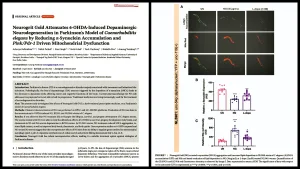
A recent study conducted on C. elegans, a microscopic worm often used in scientific research, suggests that Neurogrit Gold can help improve memory loss associated with Parkinson’s and may even extend lifespan, without negatively impacting growth or reproduction.
Advertisement
The study has gained international recognition, having been published in the journal CNS Neuroscience & Therapeutics by Wiley.
Advertisement
Source: CNS Neuroscience & Therapeutics
Acharya Balkrishna, co-founder of Patanjali Ayurved, expressed optimism about the findings, highlighting the social and mental toll Parkinson’s disease takes on patients. He noted that the disease not only affects the body but also isolates people from daily life and social connections.
According to him, Neurogrit Gold brings real hope for those looking to reclaim their independence and quality of life. He explained that the formulation is a thoughtful fusion of traditional Ayurvedic wisdom and modern scientific rigor.
Source: CNS Neuroscience & Therapeutics
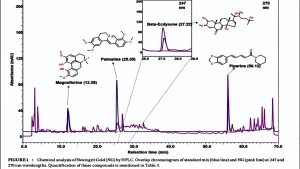
The product includes natural herbs like Jyotishmati and Giloy, along with Ayurvedic Bhasmas such as Ekangveer Ras, Moti Pishti, Rajat Bhasma, Vasant Kusumakar Ras, and Rasraj Ras, all of which have traditionally been in use to support neurological health.
Dr. Anurag Varshney, Vice President and Chief Scientist at Patanjali Research Foundation, described the study as a milestone, particularly because it is the first time an Ayurvedic medicine has been tested on C. elegans in this context. He emphasized that the results are not just encouraging for Patanjali or Ayurvedic practitioners but could also offer valuable insights for the global scientific community studying Parkinson’s disease.
Varshney elaborated on the biological side of the findings, explaining that dopamine, a key neurotransmitter in the brain, is central to the disease. Parkinson’s occurs when dopamine production drops, leading to tremors, stiffness, and the loss of simple, everyday abilities.
The research indicated that Neurogrit Gold helped reduce oxidative stress, which damages cells in Parkinson’s patients. More importantly, it boosted the activity of genes like pink-1 and pdr-1, which are essential for maintaining healthy mitochondria, as well as the cat-2 gene, which supports dopamine production.
These combined effects suggest that Neurogrit Gold could offer protective benefits at the cellular level, potentially slowing the progression of the disease.
Balkrishna captioned the post with a Sanskrit shloka meaning "the sight of saints is meritorious." He described the early morning darshan and satsang as a moment of deep spiritual joy.
The Indian pantry has not been replaced. It has been interrogated. Every packet of atta, every tin of oil, and every jar of honey now carries a question behind it.
Discover how three ancient Ayurvedic ingredients became a multi-billion dollar global wellness phenomenon, backed by science, market data, and centuries of tradition.